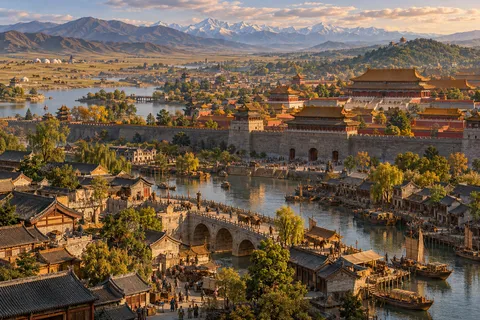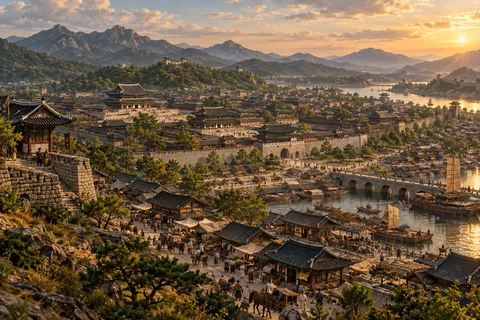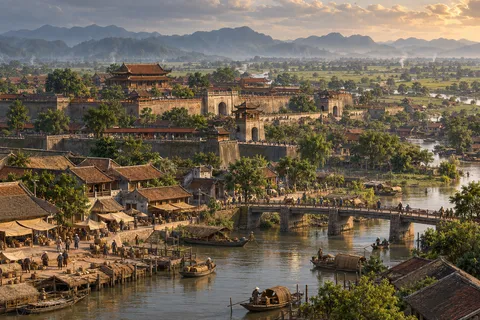
 CONCEPT ART / HISTORICAL INSPIRATION
South Asia / PLANNED CULTURE
Sikh Empire
Ranjit Singh took Lahore in 1799 and became maharaja in 1801. His state brought Sikh misls and conquered territories under a more central administration. Its inhabitants and officials included Sikhs, Hindus, and Muslims. After his death, succession struggles preceded the Anglo-Sikh wars and British annexation in 1849.
Historical focus: 1799–1849; focus on Ranjit Singh’s reign, 1801–1839
- Architecture
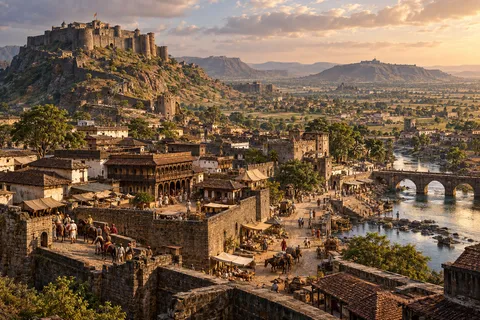
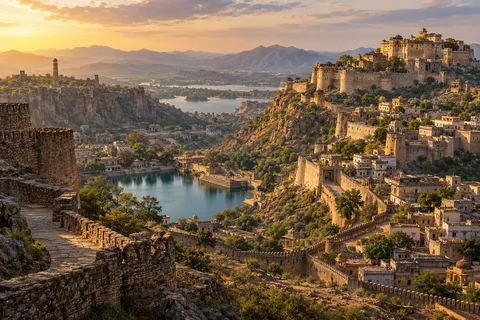
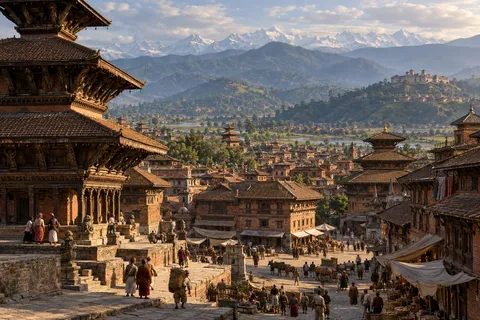
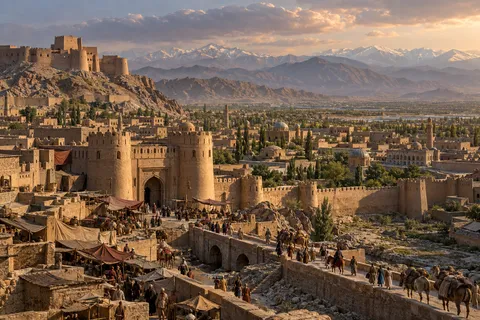
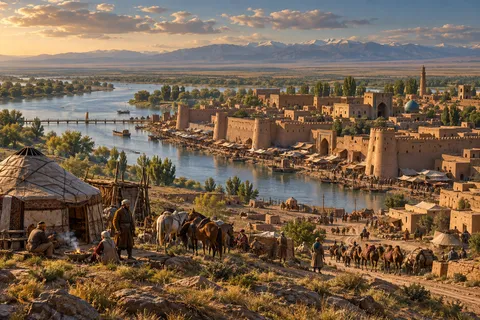
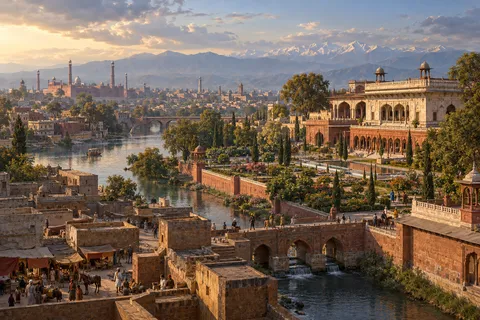
- Lahore’s royal buildings and Amritsar’s gardens and courtyards belong to a Punjabi setting with Sikh and earlier Mughal influences. Ranjit Singh’s summer palace at Ram Bagh provides a surviving architectural reference.
- Economy
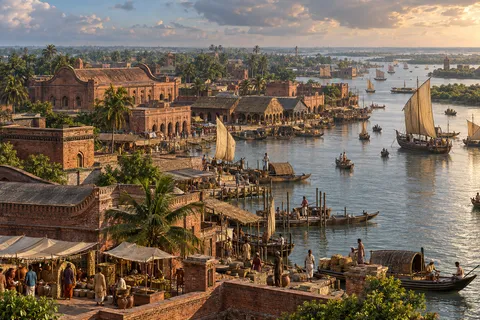
- Agricultural land revenue supported the state; urban crafts and trade connected Punjab’s towns. Maintaining paid troops and artillery required reliable provincial revenue.
- Military identity
- Cavalry remained important alongside drilled infantry and artillery. European officers helped train sections of the Khalsa army; these reforms supplemented existing regional military traditions.
Historical overview · source links and proposed gameplay are on the full culture page.
Discover this culture ↗